Life Beyond Code
Scuba dives, bike rides, travel moments, and reflections
Reflection•Jan 1, 2025•📍 Shoja, Himachal Pradesh
How I Started 2025 With Strangers Who Became Friends
December 29th, 11:45 PM. Zostel Shoja.
I'm sitting around a bonfire with 6 people I met 3 days ago. We're celebrating Priya's birthday at midnight. Someone's playing guitar. Someone else is attempting to sing (badly). I'm laughing harder than I have in months.
This wasn't the plan.
The plan was: solo trip to Himachal, work remotely, get some peace and quiet.
**Reality:** Heavy snowfall trapped us at the hostel for 2 days. No WiFi. No work. Just strangers forced to entertain each other.
And it was perfect.
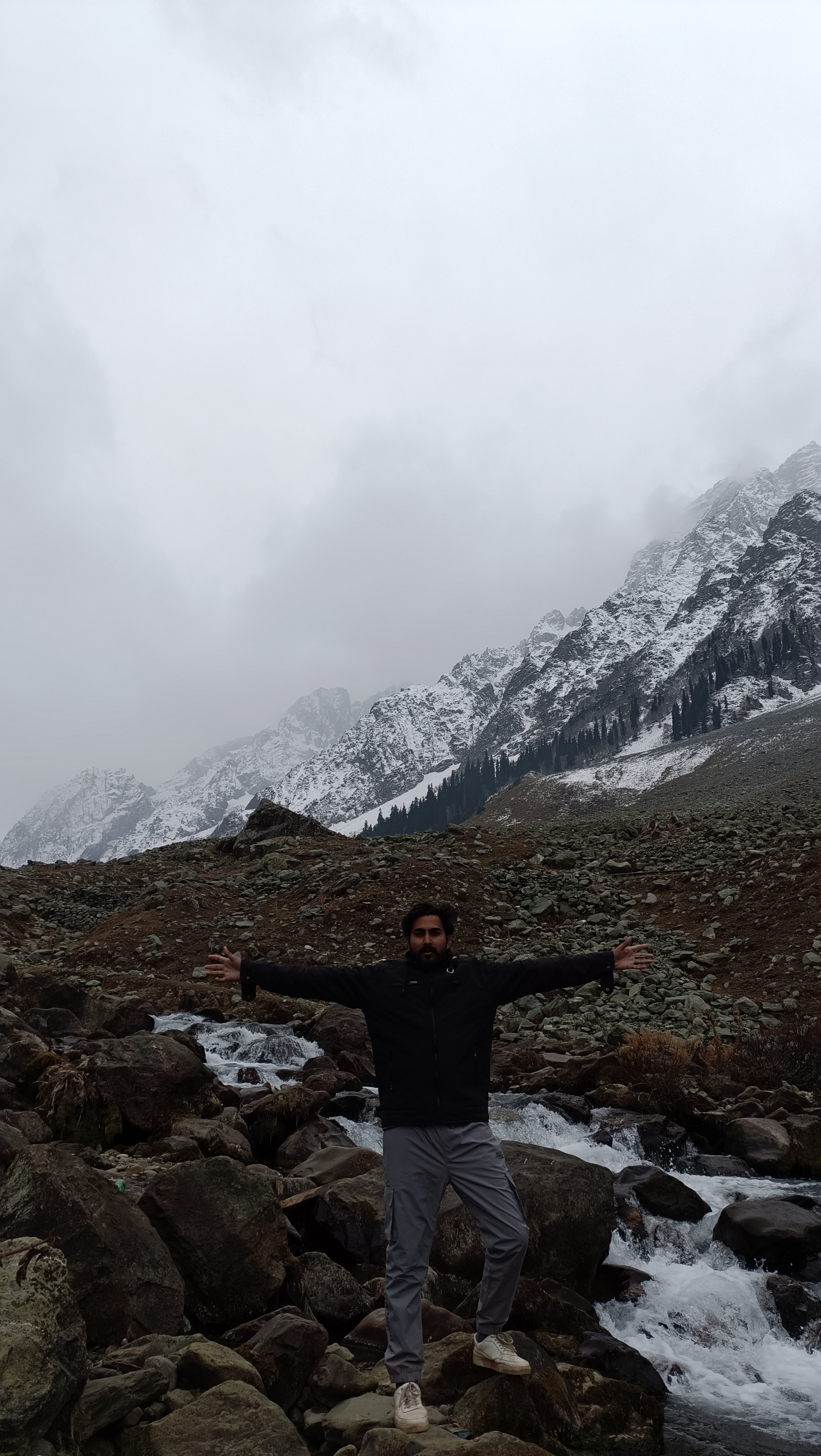
We played cards. Shared travel stories. Danced at Firgun (a local cafe) on Christmas night. Trekked to a waterfall in Tirthan Valley. Drank water straight from a freezing river in Jibhi—ice cold, crystal clear, and the purest water I've ever tasted.
On New Year's Eve, we didn't go to a party. We just sat on the hostel terrace, watching snow fall, talking about life.
Priya (from Mumbai) quit her corporate job to travel for a year.
Rahul (from Delhi) was figuring out if he should do an MBA or start a business.
Neha (from Bangalore) was a designer trying to go freelance.
Different cities. Different problems. Same questions: *"Am I doing the right thing? Is this what I'm supposed to be doing?"*
No one had answers. But somehow, talking about it with strangers felt easier than talking to friends back home.
At midnight, we didn't count down. We just looked at each other and said **"Here's to figuring it out."**
I started 2025 in the mountains, with people I'll probably never see again, but who reminded me of something important:
> The best connections happen when you're not trying to connect. When you're just... present.
## Trip Details
- **Duration:** Dec 24 - Jan 1
- **Route:** Shoja → Jibhi → Tirthan Valley
- **Stay:** Zostel Shoja (₹600/night dorm)
- **Weather:** Heavy snowfall, -2°C
- **Total cost:** ~₹8000 (stay + food + local transport)
## What Made This Trip Special
**No agenda.** Just going with the flow.
**Hostel culture**—shared spaces force you to interact.
**Bad weather = good bonding.** Stuck together = forced to talk.
**Solo travel doesn't mean lonely travel.** You won't be alone for long. Hostels, bad weather, and bonfire conversations have a way of turning strangers into friends.
Sometimes the best trips are the ones that don't go as planned.
Scuba Dive•Nov 24, 2024•📍 Neil Island, Andaman
The Day I Learned to Breathe Underwater
I was terrified.
Not of the ocean. Not of the depth. But of failing.
Day 1 of my PADI Open Water course, Ahmed (my instructor at Scuba Yogi) asked me to do something that felt impossible: take the regulator out of my mouth underwater, let it fill with water, and then clear it by exhaling sharply.
Simple, right? Except your brain is screaming "YOU NEED THAT TO BREATHE."
I panicked on the first try. Shot up to the surface. Ahmed was patient. "Your body knows what to do. Trust it."
Second try. I removed the regulator. Water rushed in. My chest tightened. But I exhaled hard, put it back in my mouth, and... I was breathing again.
**That moment changed everything.**
Over 4 days, I completed my certification dives. Each dive felt more natural. The underwater world was becoming familiar.
<DiveLog
site="Nursery"
location="Neil Island, Andaman"
depth={12}
visibility={20}
temperature={28}
duration="40 min"
highlights={["First confined water dive", "Mask clearing", "Buoyancy control"]}
date="2024-11-22"
/>
<DiveLog
site="Margerita's Wreck"
location="Neil Island, Andaman"
depth={18}
visibility={25}
temperature={27}
duration="45 min"
highlights={["Nudibranch", "Barracuda", "Open water skills"]}
date="2024-11-23"
/>
<DiveLog
site="Bus Stop"
location="Neil Island, Andaman"
depth={18}
visibility={30}
temperature={27}
duration="50 min"
highlights={["Tuna", "Coral gardens", "Final certification dive"]}
date="2024-11-24"
/>
On my final dive, I was 18 meters deep, hovering weightless above a coral reef, breathing slowly and calmly. The same person who panicked 3 days ago.
Ahmed handed me my PADI certification card. I'm officially a diver now.
But more importantly, I learned that the scariest part of any new skill isn't the skill itself—it's trusting yourself to learn it.
## What I Learned
**Panic is normal. Pushing through it is what matters.**
Good instructors don't rush you. Ahmed let me fail and try again. That's how you learn.
The underwater world is worth every moment of fear.
If you're thinking about getting certified—do it. Your brain will try to stop you. Don't listen.
Travel•Nov 19, 2024•📍 Havelock Island, Andaman
Kayaking Through Liquid Starlight
"Don't use your phone. Just experience it."
The guide's words as we pushed our kayaks into the dark water at 9 PM.
No moon. No lights. Just us, the kayaks, and the ocean.
Then I dipped my paddle.
**The water exploded with blue light.**
Bioluminescent plankton. Millions of them. Every stroke created glowing trails. Every movement painted the ocean with electric blue sparkles.
I stopped paddling. Just sat there, moving my hand through the water, watching it glow. It felt like touching magic.
> The science: These tiny organisms (dinoflagellates) emit light when disturbed. A defense mechanism. But to us, it was pure wonder.
We kayaked for an hour. No one spoke much. What do you say when you're literally paddling through starlight?
At one point, I looked back at my kayak's wake—a glowing blue trail stretching 20 meters behind me. Like I was writing on the ocean with light.
This is why I travel. Not for Instagram photos (I didn't take any—the guide was right). But for moments that make you feel like a kid again. Moments that remind you the world is still full of magic if you know where to look.
## Experience Details
- **Location:** Havelock Island mangroves
- **Duration:** ~1 hour
- **Best time:** New moon nights (darkest)
- **Cost:** ₹1500 per person
- **Group size:** 8 kayaks
## Pro Tips
1. Go on a new moon night—darker = brighter bioluminescence
2. Don't bring your phone. Seriously. Just be present.
3. Book with a local operator, not a resort (cheaper, more authentic)
4. Wear clothes you don't mind getting wet—you'll want to touch the water
Some experiences can't be photographed. This was one of them.